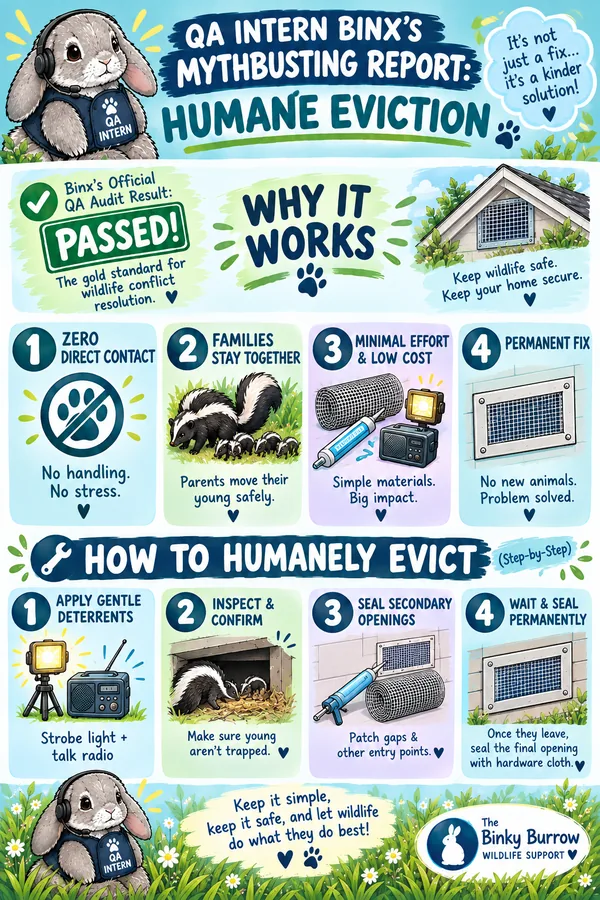
Coyotes, foxes, and bobcats may choose a quiet spot under a deck, shed, or storage building to raise their young. It can be surprising to discover a den, but trapping or moving an animal is not a simple fix. A parent may be separated from dependent young, and relocation can be stressful or restricted by local laws. The best response depends on the species, the young’s age, and the den’s location.
When it is safe to do so, giving the family space and time is often the simplest option. If the den must be vacated, contact your local wildlife agency or a qualified humane wildlife professional for advice first. They can help determine whether young are present and whether it is appropriate to encourage the family to move.
Encouraging a family to move
For some dens, temporary disturbances near the entrance may encourage the adults to move their young to another den. Recommendations vary by species and situation, so don’t begin until you’ve received guidance, particularly if the young may still be too small to travel.
A professional would suggest using a bright work light, a loud talk radio, or a mild scent deterrent near the den entrance for a limited period. Keep deterrents outside the den and use them only as directed. The family may take more than one night to move, and these methods do not guarantee that they will leave.
Avoid disturbing a den during severe weather or when the adult animals cannot safely move the young. Keep children and pets away, and don’t block the entrance while animals may still be inside.
Confirm the den is empty before repairs
Once the family has left, have a professional help confirm there is no animal remaining before permanently closing the opening. A temporary, removable indicator may help monitor activity, but it must not trap an animal inside. After the den is confirmed inactive, repair the access point with sturdy materials, such as securely fastened hardware cloth, and check for other openings that could allow wildlife to return.
Fox-specific guidance also recommends waiting until young are old enough to travel, when possible, and sealing an entrance only after the family has left. Because coyotes, foxes, and bobcats have different behavior and local protections, get species-specific advice before taking action.