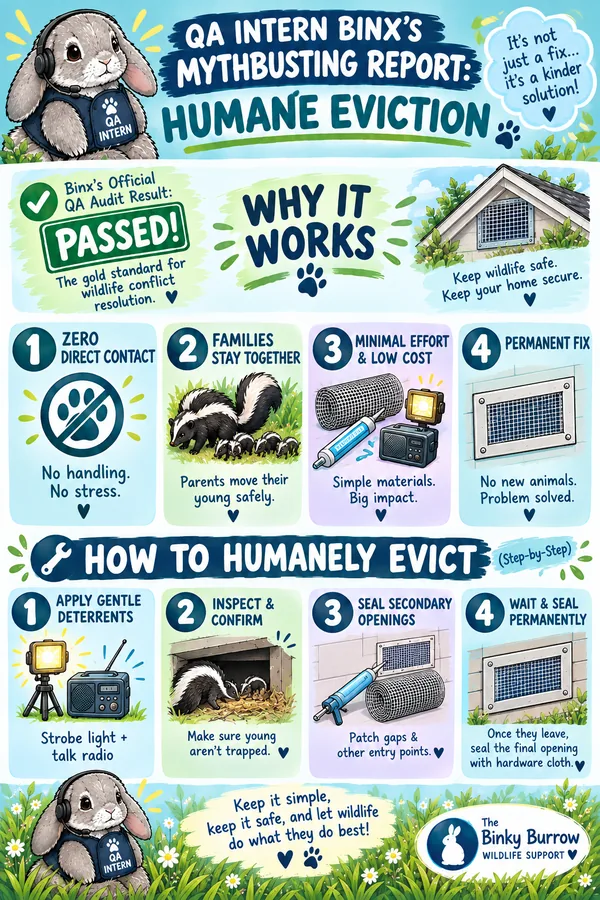
Opossums often use an area temporarily and may leave once food or shelter is no longer available. They are typically nomadic in nature. If one has settled beneath a deck or shed, patience is usually the easiest option, especially if young may be present.
If you need to encourage the opossum to move, you can make the area less comfortable after dusk with a bright light or a radio playing human voices. Some wildlife organizations also suggest placing vinegar-soaked rags near the entrance, but keep them outside the den and away from children and pets. Deterrents may need to be repeated, and they aren’t guaranteed to work. Avoid disturbing the den during severe weather.
Make sure the den is empty before closing it
Once you believe the opossum has left, loosely place crumpled newspaper at the entrance as a temporary activity check. Check it regularly. If it has moved or been disturbed, the den may still be in use, remove it and continue monitoring. A newspaper check alone can’t confirm that no young are inside; if you’re unsure, ask a professional to inspect the area.
After the den is confirmed empty, close the opening so another animal can’t move in. For a deck or building, a sturdy hardware-cloth barrier can be extended outward underground in an L shape to discourage digging. Install it securely, and check for other access points before finishing the repair.