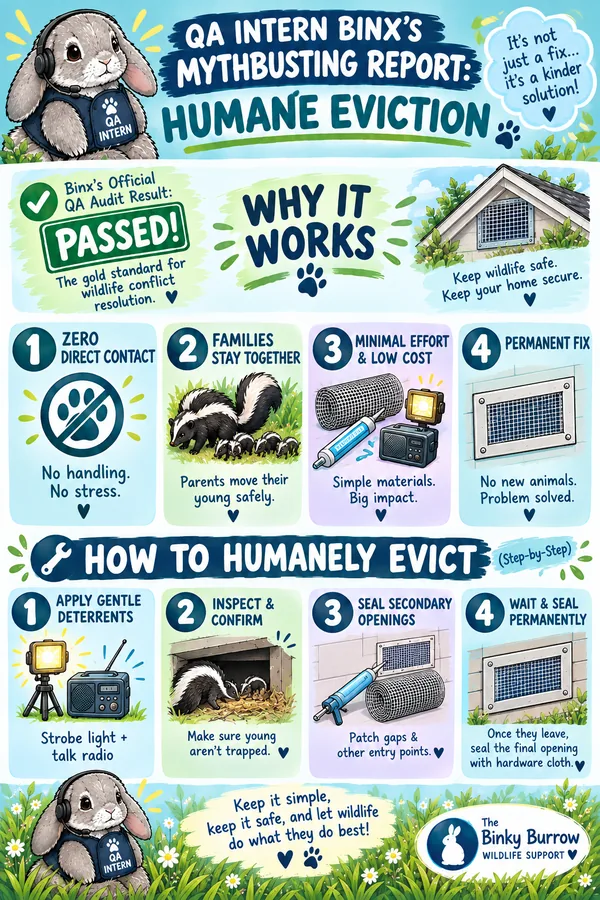
Raccoons may choose attics, chimneys, sheds, or spaces beneath decks as quiet places to rest or raise young. If you discover a den, avoid trapping or blocking the entrance. A mother may have kits hidden out of sight, and separating her from them can leave the young without care. Raccoon mothers may move their kits to another den, but they can carry them one at a time, so the move may take more than one night.
Give the family time, or get professional help
If the den isn’t creating an immediate safety issue, leaving the family undisturbed until it moves on is often the simplest option. If removal is necessary, contact a humane wildlife-exclusion professional who has experience with raccoons and dependent young. Ask how they will check for kits, keep the family together, and confirm the den is empty before making repairs. AHNOW.org also offers vetted humane exclusion companies on their “wildlife conflict” directory.
Some professionals may use temporary light, sound, or scent deterrents to encourage a mother to move her family. These approaches don’t work in every situation, and using them without knowing whether kits are present could separate the family. Avoid one-way doors or other barriers until a professional confirms they won’t block a mother from reaching her young.
Confirm the space is empty before closing it
A mother may move her kits over several nights. Don’t seal an entrance just because you haven’t seen an adult recently. If you hear kits, see signs of activity, or are unsure whether animals remain inside, stop and contact a professional. If you find a kit left behind, don’t feed or handle it; contact a permitted wildlife rehabilitator for guidance.
Once the entire family has left and the space has been checked, repair the access point to prevent re-entry. Use materials suited to the structure, such as securely installed hardware cloth around suitable deck openings, repaired soffits or vents, and a properly fitted chimney cap. Have a professional inspect attics, walls, and chimneys before sealing them so no animal is trapped inside.
To reduce future visits, secure garbage and compost, bring pet food indoors, and remove other easy food sources. If you need help, contact your local wildlife agency or a humane exclusion professional and ask for a plan that prevents re-entry without separating a mother from her kits.