
If the baby’s toenails are not black, it may not be a squirrel. Visit the I Found a Tiny Pink Animal library article to compare opossums, mice, rats, and other small mammals.
A baby squirrel found alone may still have a mother nearby. When possible, reuniting them is best. A mother squirrel will not reject her baby just because a person touched it. First, contact a permitted wildlife rehabilitator for advice, especially if you are unsure of the species or whether reunion is safe.
When to Get Help Right Away
Contact a rehabilitator promptly if the baby is injured, cold, weak, unusually thin, covered with flies or ants, or was in a cat’s or dog’s mouth. Also seek help if you know the mother is deceased or was trapped, or if poison may have been used nearby. A professional can help determine whether the baby needs care or can safely be reunited.
Reunion Steps
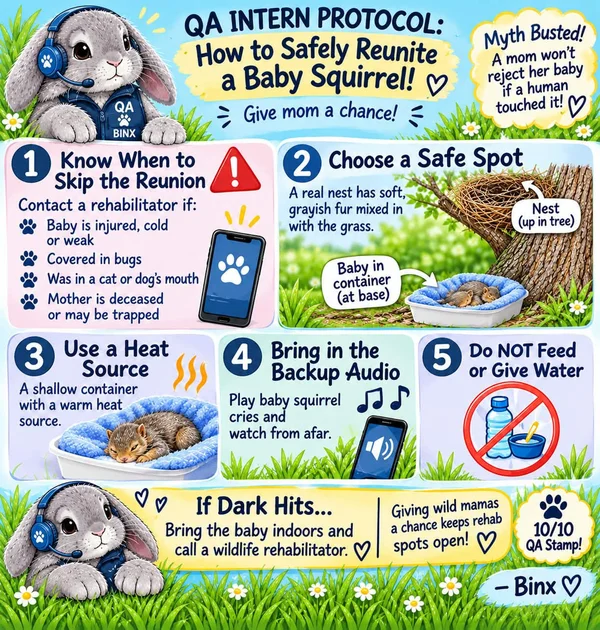
- Keep the baby warm. A very young or partly furred squirrel may not be able to regulate its body temperature. Place it in a small, open container near where it was found, with a wrapped warm water bottle or other gentle heat source underneath one side. Make sure the baby can move away from the warmth, and check that it is comfortably warm, not hot. Don’t cover the baby; the mother needs to be able to see and reach it.
- Choose a safe, accessible spot. If the nest fell, place the baby in a shallow, stable container near the original nest site, where the mother can reach it. Don’t put it somewhere it could fall, be exposed to rain, or be reached by pets. If you can’t place it safely, ask a rehabilitator what to do.
- Keep the area quiet. Bring pets indoors and watch from inside or from a well-hidden spot. Give the mother a few hours to return. Avoid crowding the area or repeatedly checking close up. Play baby squirrel distress calls from your phone: One Hour Baby Squirrel Cries To Attract Mother
- Don’t feed the baby. Food or water given the wrong way can cause serious harm. If the mother hasn’t returned by the time advised by the rehabilitator, or the baby becomes cold, weak, or distressed, call them again for next steps. If it’s getting dark and no reunion has happened, keep the baby warm in a quiet, secure container and contact a rehabilitator.
- CLOSELY watch the baby from afar. Unfortunately while the audio baby squirrel sounds will help attract mom, it may also catch the attention of predators in the area so you will need to closely watch the baby so that you can react if you notice a predator in the sky or on the ground approaching.
Do not attempt a reunion during severe weather or when the location is unsafe. Mom will not retrieve at dark and she will not retrieve a cold baby. Squirrels often have a backup drey (nest) but it could take quite a few hours if they aren’t happy with it and want to build a new one. A rehabilitator may recommend a different plan based on the baby’s age, condition, and where it was found.
A squirrel ran up my pants leg
Juvenile squirrels will often leave the nest and run up to humans for help when something has happened to their mom and they have been without milk for quite some time. Unfortunately, reuniting is typically not an option here and you will need to contain the baby/juvi and reach out to your local wildlife rehabilitator.