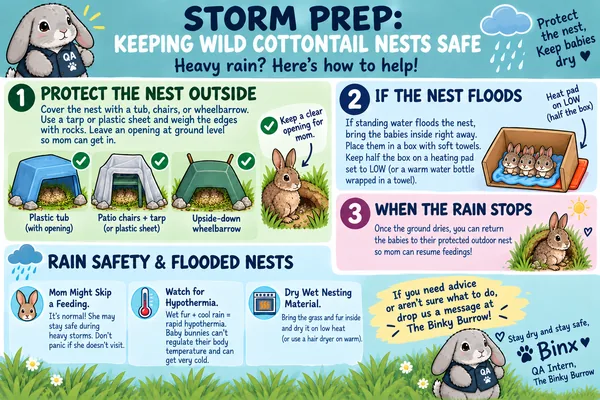
First: Protect the Nest OUTSIDE
Before doing anything else, try to shelter the nest right where it is so mom can still care for her babies:
Cover the Nest Area: Place a plastic tub (with an opening cut in the side) or patio chairs directly over the nest. Drape a tarp, plastic sheet, or shower curtain liner over top to block the rain, securing the edges with rocks so it stays put. You can also put an upside-down wheelbarrow over the spot.
Ensure Mom Has Access: Make sure there is always a clear opening at ground level so mom can slip underneath during her nighttime visits.
Rain Safety & Flooded Nests
Mom Might Skip a Feeding: It’s totally normal! Mother cottontails will sometimes skip a feeding during heavy storms to stay safe. As long as the babies are warm and dry, don’t panic if she doesn’t visit right away.
Watch Out for Hypothermia: Wet fur + cool rain = rapid hypothermia for tiny kits. Baby bunnies cannot regulate their own body temperature, so getting soaked can quickly become life-threatening.
How to Warm/Dry Nesting Material: If the nest gets damp, bring the grass and fur inside and dry it in the oven on a cookie sheet on low heat (or use a hair dryer on warm) so they have a fresh, warm bed.
If the Nest Floods, Bring Them In: If standing water completely floods the nest, bring the babies inside immediately! Place them in a box lined with fleece or soft towels, and set half of the box on a heating pad set to LOW (or use a warm water bottle wrapped in a towel). Keeping heat on only one side lets them move away if they get too warm.
Once the heavy rain clears and the ground dries, you can return the babies to their protected outdoor nest so mom can resume feedings!