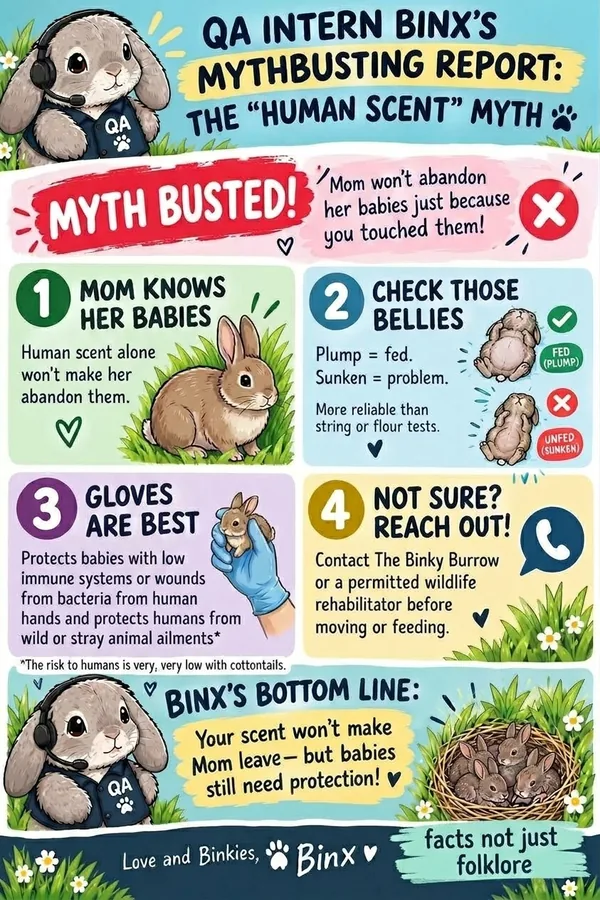
A rabbit nest can look abandoned even when the mother is caring for her young. Mother rabbits usually visit briefly, usually between dusk and dawn, so it’s normal not to see her near the nest during the day.
Check the nest
If the nest is intact and the babies look warm, rounded, and uninjured, leave them where they are and keep pets and people away. The only way to know if mom is coming back is to check their bellies. If unsure, fully extend their backs so that the belly isn’t bunched up, snap a picture, and share it with your local wildlife rehabilitator so they can check for you.
When to get help
Contact a wildlife rehabilitator if a baby is injured, cold, weak, visibly thin or dehydrated, covered in fly eggs or maggots, if a cat or dog has had it in its mouth or if the nest appears undisturbed after an overnight check. A fully furred, alert young rabbit about the size of a baseball may already be old enough to live independently.
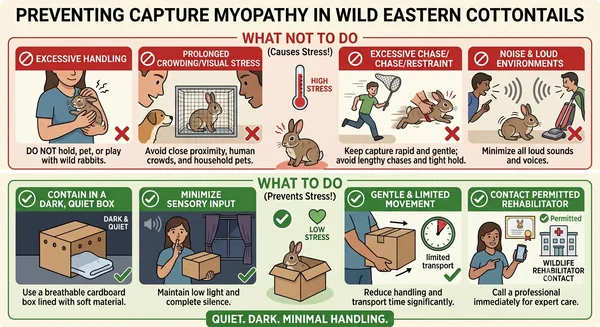
Don’t feed or give water to baby rabbits, and don’t keep them as pets. Never relocate babies, if they are still nursing, they know exactly where the nest is in relation to where they were. If you’re unsure, call a local wildlife rehabilitator and follow their guidance.