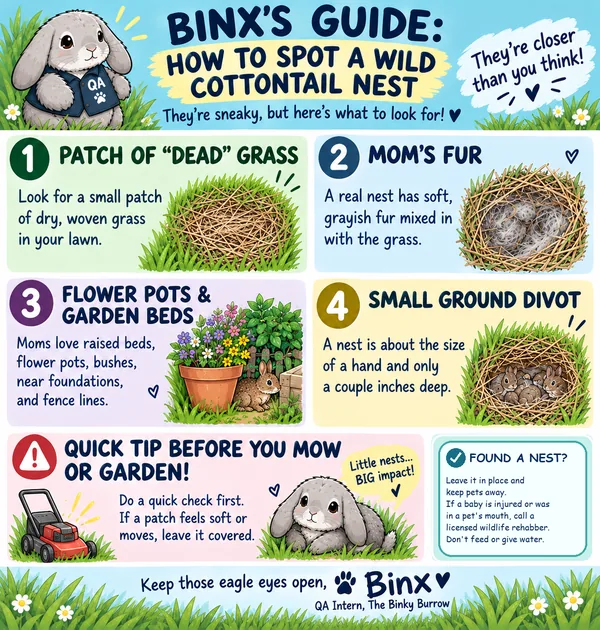
Look for a Patch of “Dead” Grass. Mother cottontails don’t dig deep burrows. Instead, they scrape out a small, shallow divot in the soil and cover it back up with dead grass and yard debris. If you see a random patch of dry, woven grass in the middle of your lush green lawn, give it a closer look!
Check for “Mom’s Fur”. Mama rabbit pulls soft fur from her own chest to line the nest and keep her kits warm. A real nest will almost always have a layer of soft, grayish rabbit fur mixed right in with the dried grass.
Inspect Flower Pots & Garden Beds. Moms love convenient, sheltered spots! Raised garden beds, flower pots, under low-hanging bushes, near house foundations, and right along fence lines are prime real estate for a cottontail nursery.
Watch Out for a Small Ground Divot. A nest is only about the size of an adult human hand or a small saucer, and just a couple of inches deep. It often looks like a lawnmower scalped a tiny patch of dirt, but underneath that top layer of dried grass and fur are tiny, snuggly kits!
Quick Tip Before You Mow or Garden!
Always do a quick “walk-through” of your yard before mowing, weed-eating, or letting dogs out! If you spot a suspect patch of grass, gently poke the side with a stick or wearing gloves; if it feels soft and squishy or moves slightly, leave it covered and let the sweet babies snooze!