
Not every mammal needs rescue, and careless handling can put both you and the animal in danger. Always confirm that rescue is truly necessary before approaching. If you are unsure, ask first: The Binky Burrow Wildlife Support Chat, or a wildlife rehabilitator. Find a local permitted rehabilitator at AHNOW.org.
Does it need rescue?
Rabies vector species: Take extra precautions. Raccoons, skunks, foxes, and coyotes may have been injured because they were already weakened by a sickness such as canine distemper or rabies. Carelessly handling the animal while attempting a rescue can put the animal’s life in danger due to potential rabies exposure. Be especially careful if the animal appears calm but is injured.
Non-rabies vector species: Rescue is warranted if a squirrel, opossum, rabbit, or beaver has been hit by a car or attacked by a dog or cat.
Bats: Do not attempt rescue on your own first; get detailed, bat-specific instructions from The Binky Burrow Wildlife Support Chat or a bat rehabilitator before you act. You can find rehabilitators that specialize in bats at batworld.org on their locate a rescuer map along with other educational materials.
Baby animals: Many healthy babies are mistakenly “rescued” when their parents are nearby. Always check baby animal guidance before intervening.
Stay safe
An injured wild animal may bite or scratch out of fear. Protect yourself and minimize stress to the animal. You will need thick gloves, a towel or blanket (to cover and calm the animal), and a secure container, a box or pet carrier with air holes. If you cannot safely contain the animal, do not force it; reach out to local authorities while having a local wildlife rehabilitator on standby, The Binky Burrow, or a wildlife rehabilitator for assistance.
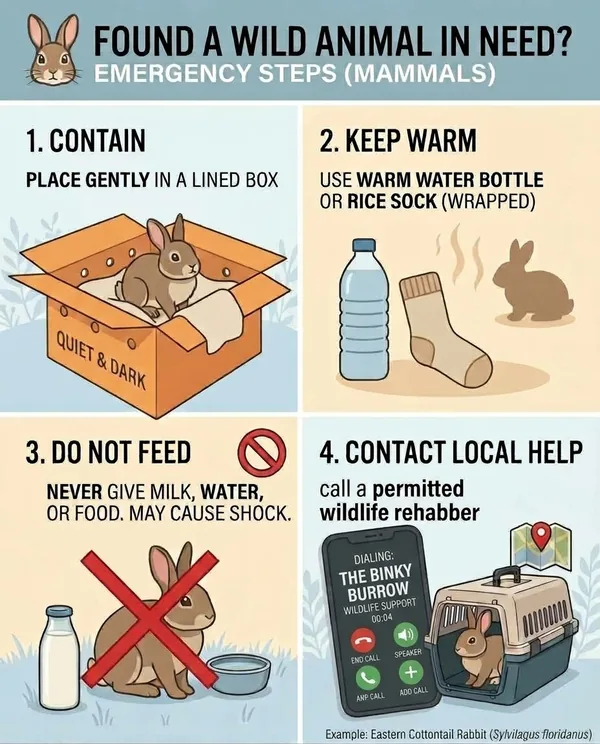
Box it up
Prepare the container before you pick the animal up.
Tiny to small (e.g., baby squirrels): use a shoebox lined with a T-shirt (not a towel; tiny feet can get tangled in the threads). Add small air holes from inside to outside on the lid.
Medium (e.g., opossums): use a box with a secure lid (with air holes) or a small to medium pet carrier. Cover the pet carrier with a towel to reduce stress. Provide a soft T-shirt inside for hiding and comfort.
Large (e.g., adult rabbits): use a sturdy pet carrier lined with a T-shirt. Avoid flimsy boxes; strong animals can escape. Use sturdy transport cages for rodents that are prone to chew. Transport the animal to a rehabilitator immediately to prevent escape.
Pick it up
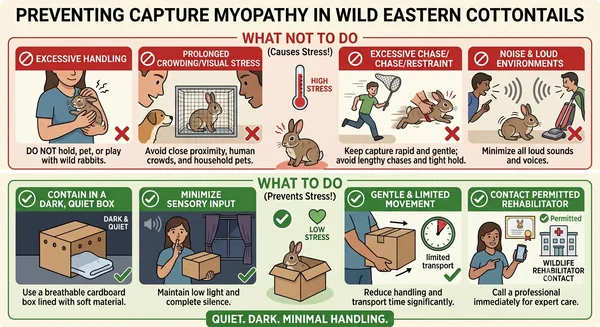
Approach quietly, slowly, and cautiously. Cover the animal completely with a towel or blanket; this reduces fear by blocking vision. Extra layers of fabric plus your gloves can help protect you. Never lift an animal by the tail.
Small to medium mammals: after covering, gently lift the animal into the container. Stay aware of its mouth and feet.
Larger mammals: place the carrier facing the animal and guide it inside using a towel or broom. Often, the animal will climb into the carrier if it is physically able. Alternately, place the container over the animal, then slide cardboard underneath. Carefully and slowly tilt the container upright and secure the lid or door.
Once it is contained
- Wash your hands thoroughly, even if you wore gloves.
- Put the animal in a quiet, warm, dark location away from children and pets.
- Do not feed or handle the animal.
- Provide warmth. Heat can be lifesaving. Then arrange to get the animal to a wildlife rehabilitator as soon as you can.
Sources
- DFW Wildlife Coalition, “I Found an Injured Mammal” (published February 11, 2019; updated October 15, 2025). Summarized by The Binky Burrow.