
Educational Library
Infographics and quick guidance on common wildlife situations.
Binx’s checklist
- Identify
- Keep safe
- Avoid common mistakes
- Get the right help
Articles
Animals
Choose an animal
Categories
Situations
All 42 articles
-
Renesting a baby bird: how to create a safe substitute nest
Birds · Baby animals · Nests · Species-specific care
A young bird on the ground may need help, or it may be a fledgling that is meant to be out of the nest.
-
Bird strikes: helping birds avoid window collisions
Birds · Injured wildlife · Common mistakes · Species guides
A bird flying into a window may seem to have simply startled itself.
-
I hear birds in my chimney
Birds · Nests · Nuisance wildlife
Chimney swifts are small, migratory birds that use chimneys and other vertical, enclosed spaces as nesting and roosting sites.
-
Ducks and nests in your yard
Birds · Nests · Nuisance wildlife · Baby animals
Depending on the species and location, ducks may scout for nesting spots from late winter into summer.
-
Living near an egret or heron rookery
Birds · Nests · Nuisance wildlife · Species guides
A rookery is a place where birds gather to nest or roost, often in trees.
-
Getting to know the nine-banded armadillo
Mammals · Species guides · Wildlife facts
With its armored body, pointed snout, and strong digging claws, the nine-banded armadillo is easy to recognize.
-
Something is digging holes in the yard
Mammals · Nuisance wildlife · Common mistakes
Armadillos, skunks, opossums, and raccoons all forage for insects and other small animals in the soil.
-
I found an orphaned armadillo
Mammals · Baby animals · Species-specific care
A young armadillo seen alone is not necessarily orphaned.
-
Found a bat? In the house, on the ground, or roosting
Mammals · Nuisance wildlife · Injured wildlife · Find the right help
If the bat has accidentally gotten into the house, please check out Bat World Sanctuary’s steps to retrieve the bat safely and return it outdoors.
-
Bats and rabies: facts, myths, and what to do
Mammals · Wildlife facts · Common mistakes · Species guides
Rabies is a serious viral disease that affects the nervous system.
-
Beavers: why they build dams, and humane ways to address conflicts
Mammals · Nuisance wildlife · Species guides · Find the right help
Beavers are large, mostly nocturnal rodents that eat the bark, leaves, and twigs of trees and shrubs, along with aquatic plants.
-
Found an orphaned beaver kit
Mammals · Baby animals · Species-specific care
A beaver seen alone is not necessarily orphaned.
-
Bobcats: hazing and keeping them from visiting
Mammals · Nuisance wildlife · Species guides
Hazing means using a brief, humane disturbance to encourage a wild animal to leave and keep its natural wariness of people.
-
Bobcat kits in my yard: are they orphaned?
Mammals · Baby animals · Species-specific care
Mother bobcats are single moms.
-
Humane eviction: coyote, fox, and bobcat dens
Mammals · Nuisance wildlife · Species-specific care
Coyotes, foxes, and bobcats may choose a quiet spot under a deck, shed, or storage building to raise their young.
Infographic
-
Coyotes: hazing, keeping them from visiting, and coexistence
Mammals · Nuisance wildlife · Species guides · Wildlife facts
Hazing means using a brief, humane disturbance to encourage a wild animal to leave and keep its natural wariness of people.
-
Coyote pups in my yard: are they orphaned?
Mammals · Baby animals · Species-specific care
A coyote pup seen alone is not necessarily orphaned.
-
How to tell if a fawn needs help
Mammals · Baby animals · Injured wildlife · Species guides
How to tell if a fawn needs immediate help.
-
Found a fox kit? Orphaned or not, and reuniting
Mammals · Baby animals · Species-specific care
A fox kit seen alone is not automatically orphaned.
-
Found an orphaned opossum
Mammals · Baby animals · Species-specific care
Unfortunately, if you’ve found an opossum too young to be on its own, mom isn’t coming back to look for her joeys so it’s an automatic pass to a wildlife rehabilitator.
-
How to humanely evict an opossum
Mammals · Nuisance wildlife · Species-specific care
Opossums often use an area temporarily and may leave once food or shelter is no longer available.
Infographic
-
I found an orphaned rabbit
Mammals · Baby animals · Nests · Species-specific care
A rabbit nest can look abandoned even when the mother is caring for her young.
Infographic
-
I found a rabbit nest in my yard, but I have dogs
Mammals · Nests · Baby animals · Species-specific care
If your dog discovers a nest, here is how you can keep the babies safe until they grow up:
Infographic
-
How to spot a wild rabbit nest
Mammals · Nests · Baby animals · Species-specific care
Look for a Patch of “Dead” Grass.
Infographic
-
Reuniting a wild rabbit kit with mom
Mammals · Baby animals · Species-specific care
Unfortunately, the doe will only go directly to the nest to check in and nurse her young.
Infographic
-
How to protect a rabbit nest from rain
Mammals · Nests · Baby animals · Species-specific care
Before doing anything else, try to shelter the nest right where it is so mom can still care for her babies:
Infographic
-
Found a baby raccoon: orphaned or not, and reuniting
Mammals · Baby animals · Species-specific care
A young raccoon by itself isn’t necessarily abandoned.
-
Raccoon or skunk out during the day
Mammals · Species guides · Wildlife facts · Common mistakes
Seeing a nocturnal animal during the day does not automatically mean something is wrong.
-
How to humanely evict a raccoon mother and kits
Mammals · Nuisance wildlife · Species-specific care
Raccoons may choose attics, chimneys, sheds, or spaces beneath decks as quiet places to rest or raise young.
Infographic
-
Found a baby skunk: orphaned or not, and reuniting
Mammals · Baby animals · Species-specific care
A baby skunk near a den isn’t automatically orphaned.
-
How to humanely evict a skunk
Mammals · Nuisance wildlife · Species-specific care
Skunks may settle near homes when they find food, water, and a sheltered place to rest or raise young.
Infographic
-
I found an orphaned squirrel
Mammals · Baby animals · Species-specific care
If the baby’s toenails are not black, it may not be a squirrel.
Infographic
-
How to humanely evict a squirrel
Mammals · Nuisance wildlife · Species-specific care
Daytime sounds in an attic or wall may be squirrels.
Infographic
-
What to do if you find a snake in your house
Reptiles · Nuisance wildlife · Species guides
Stay calm and keep your distance.
-
How to deter snakes from your yard
Reptiles · Nuisance wildlife · Species guides
Snakes may visit yards where they can find shelter or prey.
-
Found a turtle? Crossing the road, or a baby on its own
Reptiles · Baby animals · Species guides · Common mistakes
Always help the turtle cross in the direction that it was going.
-
Containing an injured or orphaned mammal
Wildlife facts and resources · Injured wildlife · Baby animals · Find the right help
Not every mammal needs rescue, and careless handling can put both you and the animal in danger.
Infographic
-
Containing an injured or orphaned bird
Wildlife facts and resources · Injured wildlife · Baby animals · Find the right help
An adult should assess carefully before picking a bird up.
-
Ways to provide heat for an orphaned or injured wild animal
Wildlife facts and resources · Injured wildlife · Baby animals
Saving a life begins with making sure an orphaned or injured animal has heat.
Infographic
-
I found a tiny pink animal. What is it?
Wildlife facts and resources · Baby animals · Wildlife facts · Find the right help
A tiny, hairless animal can be difficult to identify.
-
Why trapping and relocating isn’t the answer
Wildlife facts and resources · Common mistakes · Nuisance wildlife
Two of Binx’s mythbusting reports: why trapping and relocating a wild animal backfires, and how a humane eviction works instead.
Infographic
-
Do not feed wildlife: Binx’s mini-series
Wildlife facts and resources · Common mistakes · Injured wildlife · Baby animals
Binx’s mini-series on why food and water can hurt a wild animal in need, in five parts, plus the truth about rabbits and carrots.
Infographic
Nothing in the library matches that yet.
Binx can help you with the next safe step, or a person can look at it with you.
Binx’s infographics
-
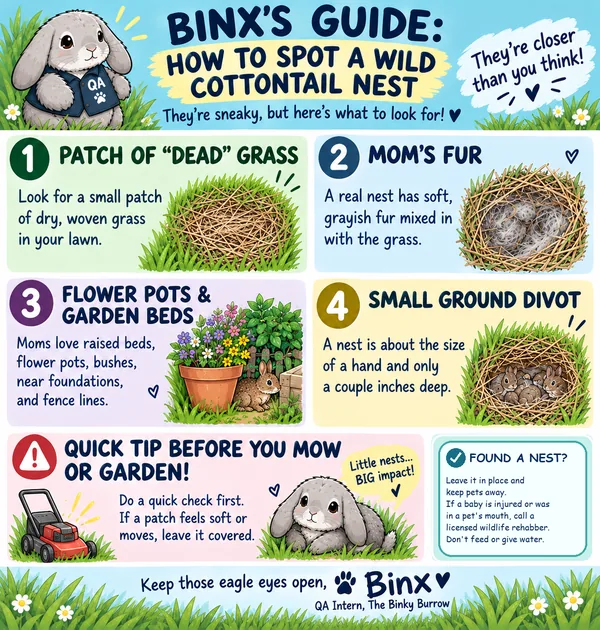 Binx’s guide: how to spot a wild cottontail nest
-
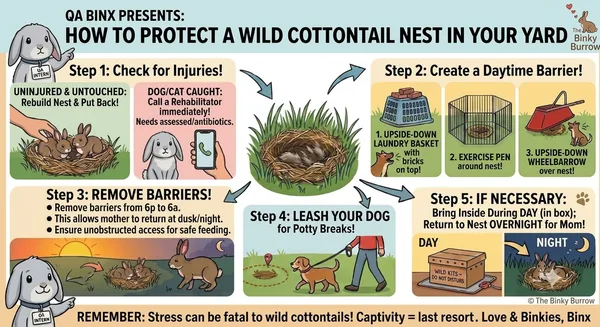 How to protect a wild cottontail nest in your yard
-
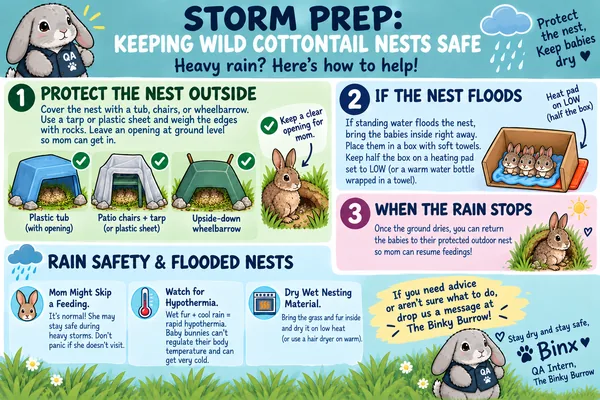 Storm prep: keeping wild cottontail nests safe
-
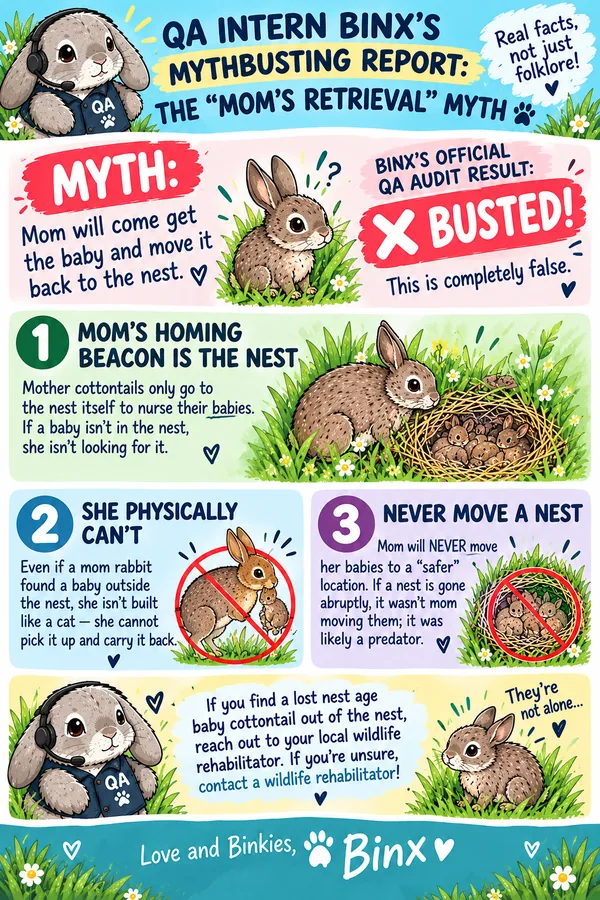 Mythbusting: the mom retrieval myth
-
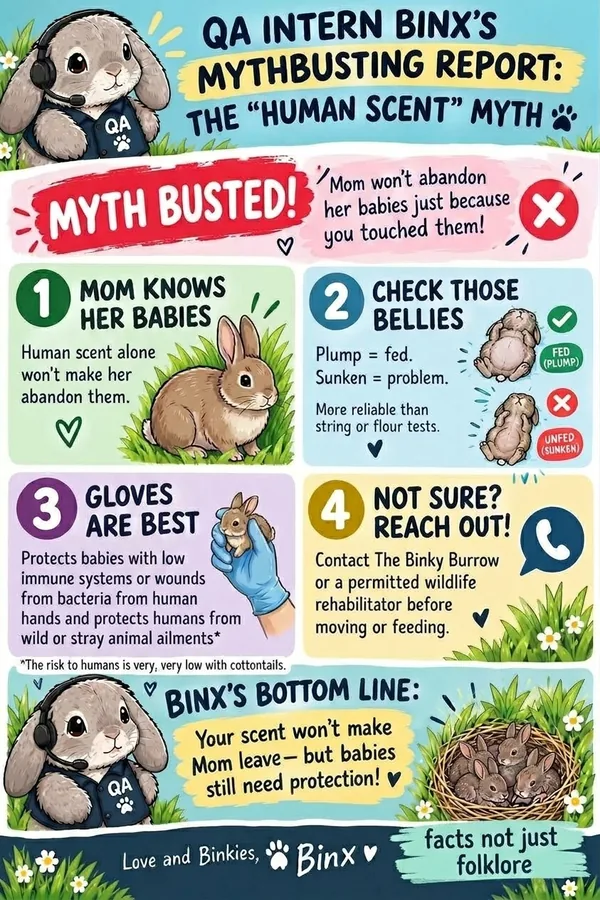 Mythbusting: the human scent myth
-
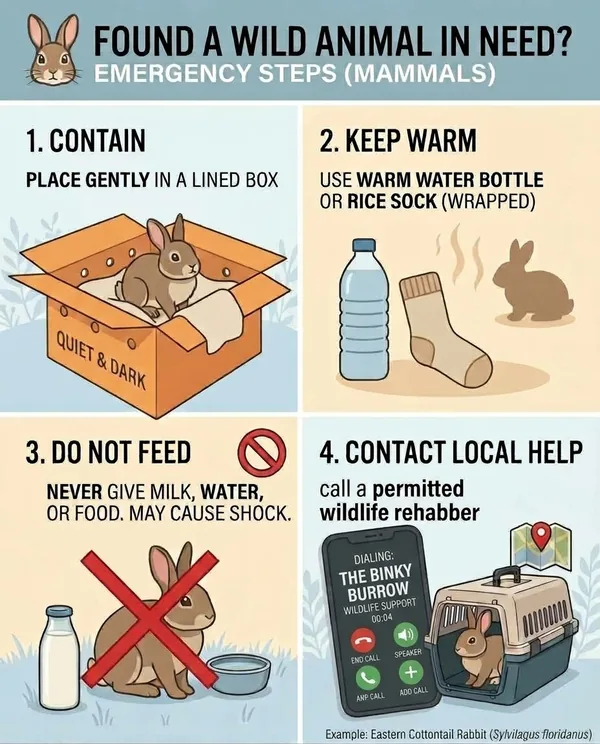 Found a wild animal in need? Emergency steps for mammals
-
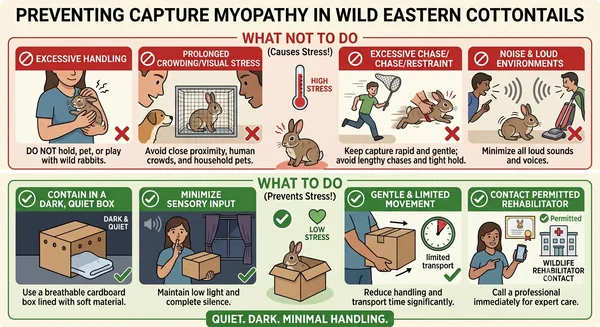 Preventing capture myopathy in wild eastern cottontails
-
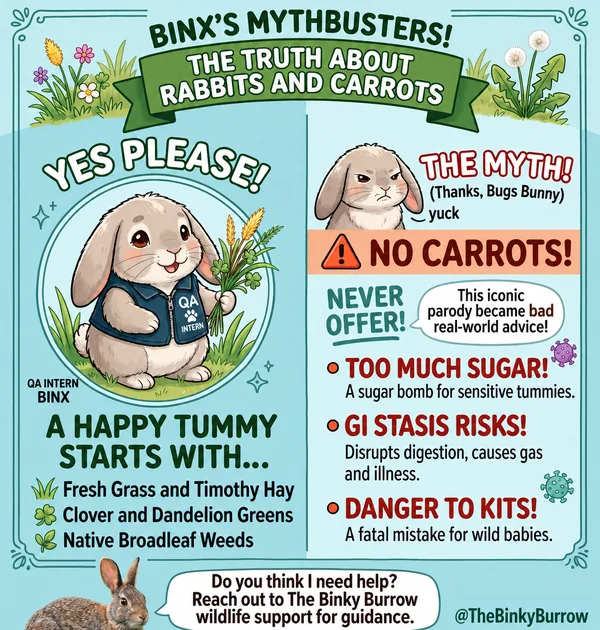 Binx’s mythbusters: the truth about rabbits and carrots
-
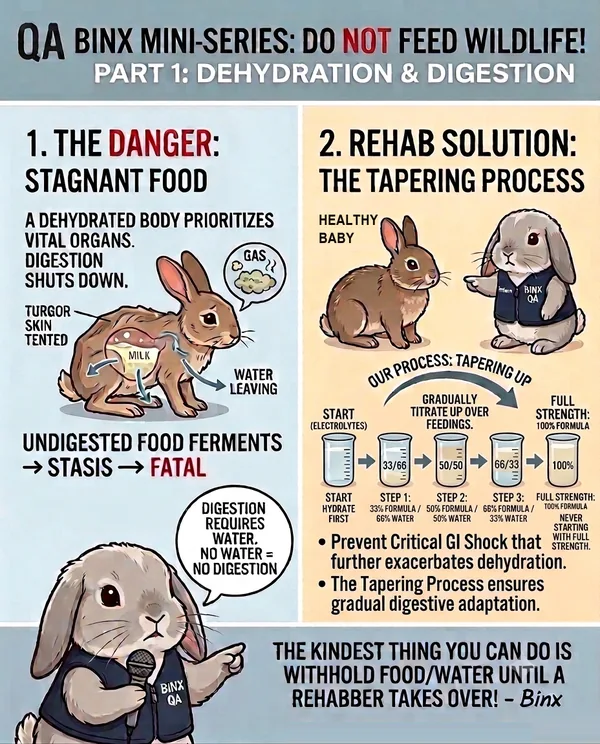 Do not feed wildlife, part 1: dehydration and digestion
-
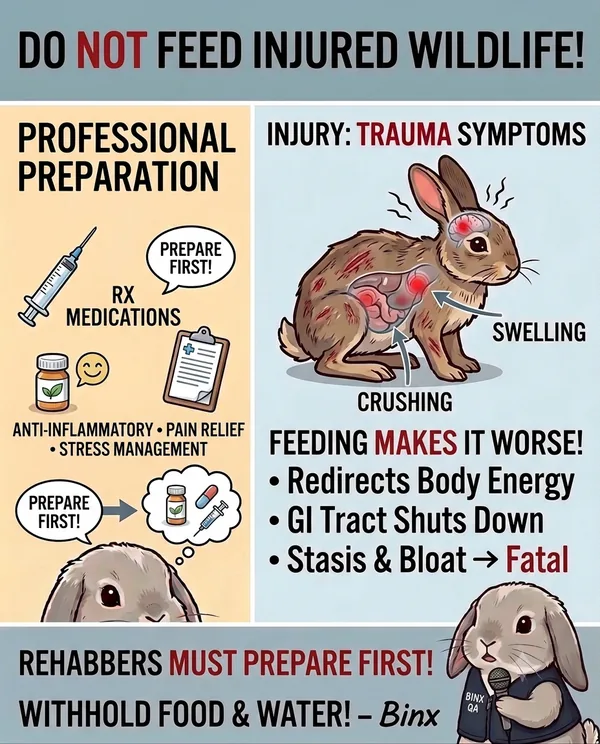 Do not feed wildlife, part 2: do not feed injured wildlife
-
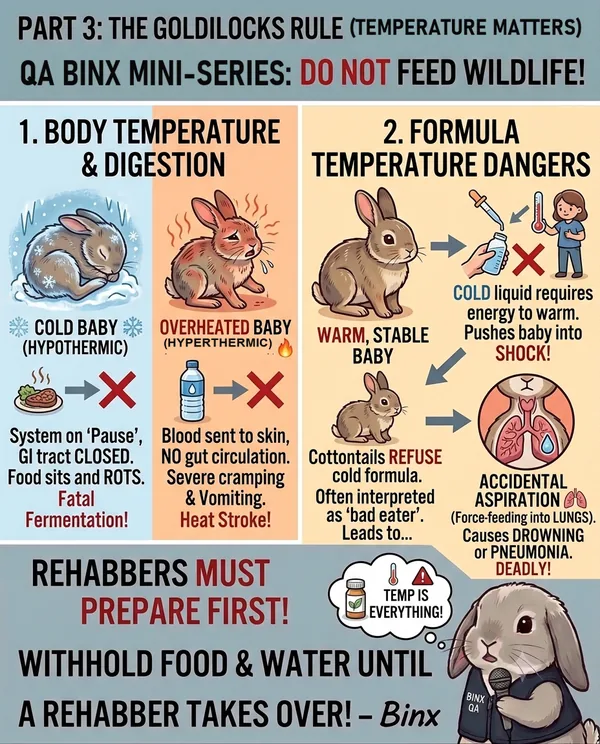 Do not feed wildlife, part 3: the Goldilocks rule
-
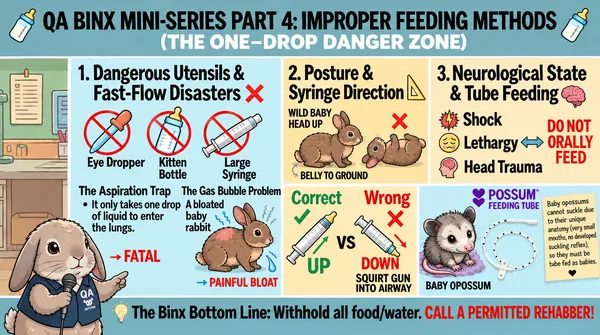 Do not feed wildlife, part 4: improper feeding methods
-
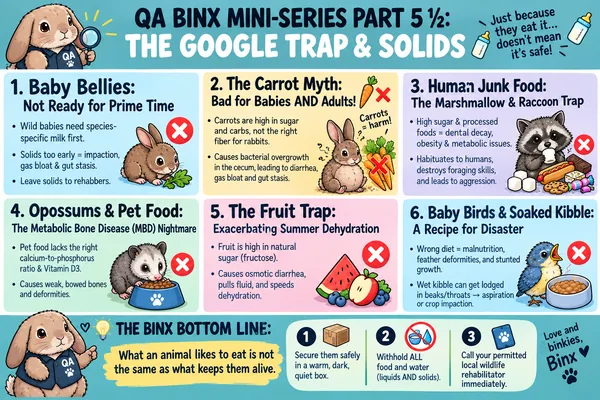 Do not feed wildlife, part 5: the Google trap and solids
-
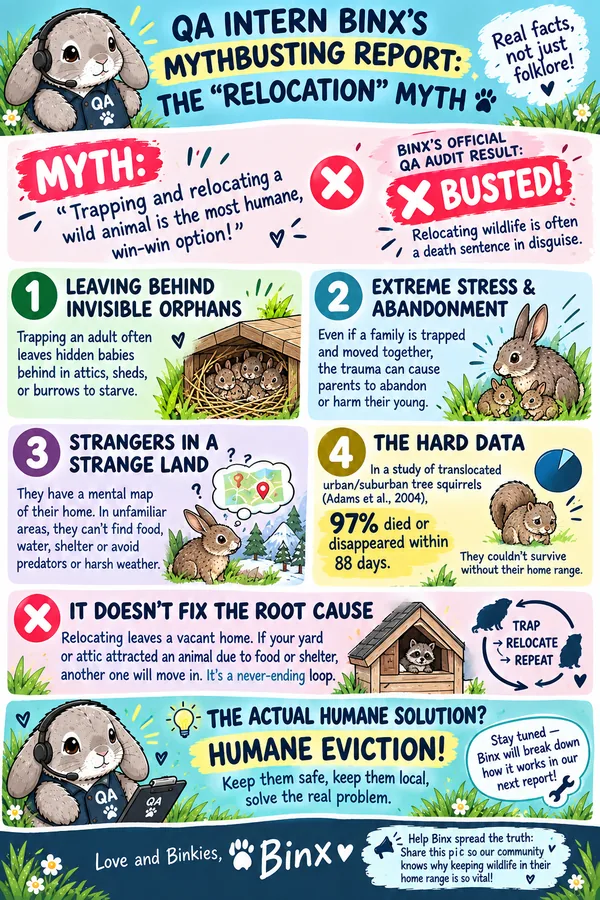 Mythbusting: the relocation myth
-
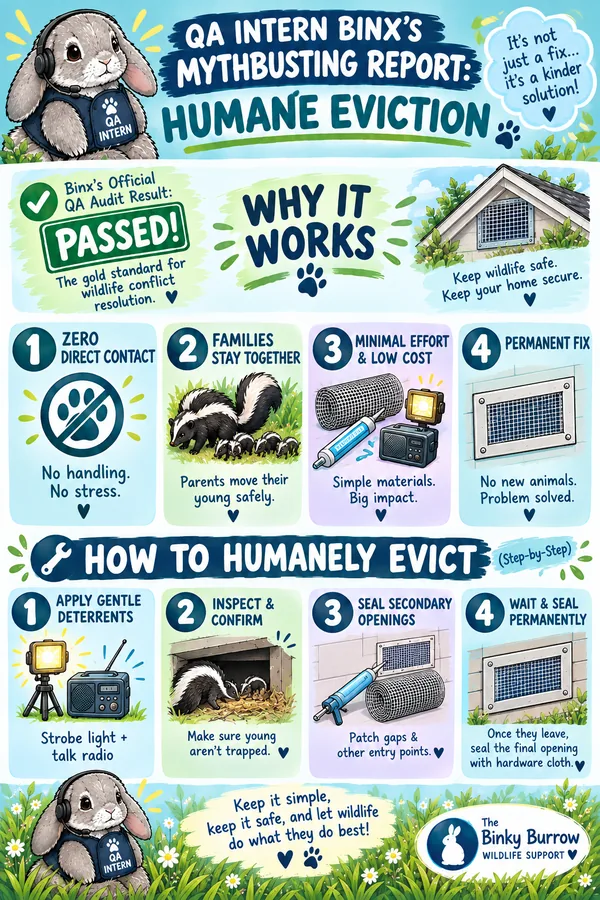 Mythbusting: humane eviction
-
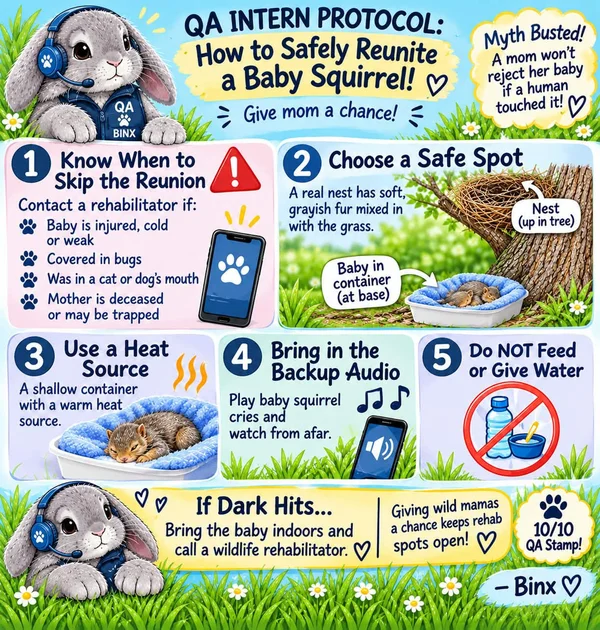 QA Intern protocol: how to safely reunite a baby squirrel
Free wildlife education. Personalized help when you need more.
Placement assistance means reasonable efforts to identify and contact appropriate wildlife-care resources. It does not guarantee that a rehabber will accept an animal, and wildlife handling or transport remains subject to applicable laws, permits, and facility capacity.